

Hey there! I'm a supplier of Zr3 Zirconium Rod, and today I wanna chat about one of the most crucial aspects of these rods - their hardness.
First off, let's get real basic about zirconium. It's a super cool metal. You might not know much about it, but it's got some amazing properties. Zirconium has a high melting point, it's corrosion - resistant, and it's biocompatible. That's why it's used in all sorts of industries, from aerospace to medicine.
Now, when it comes to Zr3 Zirconium Rod, hardness is a big deal. Hardness, in simple terms, is how resistant a material is to being scratched, dented, or deformed. For Zr3 rods, their hardness is determined by a bunch of factors.
One of the main factors is the composition. The chemical makeup of Zr3 Zirconium Rod is unique. It contains a specific percentage of zirconium and other alloying elements. These alloying elements can significantly affect the hardness of the rod. Some might increase hardness by forming hard - phase compounds within the metal matrix, while others can enhance ductility at the expense of a bit of hardness. It's like a carefully balanced recipe - you need just the right amount of each ingredient to get the perfect result.
The manufacturing process also has a huge impact on the hardness of Zr3 Zirconium Rod. For example, the way the rod is forged plays a role. Forging involves shaping the metal by applying compressive forces. If the forging is done at the right temperature and with the right pressure, it can result in a more uniform grain structure in the rod. A finer and more uniform grain structure usually means higher hardness.
Another manufacturing step that affects hardness is heat treatment. Heat treatment is like a magic wand for metals. By heating the Zr3 rod to specific temperatures and then cooling it at different rates, we can control its hardness. For instance, quenching - rapidly cooling the rod - can make it harder. But it also makes the rod more brittle. So, we have to find a balance. Tempering, which is a follow - up process after quenching, can reduce the brittleness while still maintaining a good level of hardness.
Now, let's talk about how we measure the hardness of Zr3 Zirconium Rod. There are a few common methods. One is the Vickers hardness test. In this test, a diamond indenter is pressed into the surface of the rod with a specific load. The size of the indentation left on the surface is measured, and from that, the Vickers hardness number (HV) is calculated. This method is great because it can be used on a wide range of materials and can measure hardness accurately even in small areas.
Another popular method is the Rockwell hardness test. In the Rockwell test, a hard indenter, either a steel ball or a diamond cone, is pressed into the rod. The depth of the indentation is measured, and the hardness is read directly from a scale. This test is quick and easy to perform, making it a favorite in many industrial settings.
So, what's the typical hardness range of Zr3 Zirconium Rod? Well, it can vary depending on the manufacturing process and the specific application requirements. Generally, the Vickers hardness of Zr3 rods can range from around 150 HV to 250 HV. But this is just a ballpark figure. If the rod is heat - treated or has a different composition, the hardness can be outside of this range.
Why is the hardness of Zr3 Zirconium Rod so important? Well, in aerospace applications, for example, the rods need to be hard enough to withstand high - stress conditions. They're used in components like engine parts and structural elements. If the rod isn't hard enough, it can deform under the extreme forces in an aircraft engine, which could lead to serious problems.
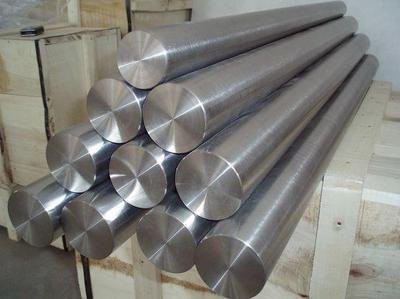

In the medical field, Zr3 zirconium rods are used in dental implants and orthopedic devices. The hardness is important here because these implants need to be able to resist wear and tear in the human body. A hard implant will last longer and provide better support to the surrounding tissues.
If you're in need of other types of zirconium rods, we also offer Zr5 Zirconium rod and Zr2 Zirconium Rod. Each type has its own unique properties, and the hardness can vary between them.
If you're interested in Zr3 Zirconium Rod or any of our other zirconium products, don't hesitate to reach out. We're here to answer all your questions and discuss your specific requirements. Whether you need rods for a small - scale project or a large - scale industrial application, we've got you covered.
In conclusion, the hardness of Zr3 Zirconium Rod is a complex and important characteristic. It's influenced by the rod's composition, manufacturing process, and can be measured using different methods. Understanding the hardness is crucial for ensuring the rod performs well in its intended application.
References:
- ASM Handbook Volume 1: Properties and Selection: Irons, Steels, and High - Performance Alloys
- Metals Handbook: Desk Edition, 2nd Edition
- The Science and Engineering of Materials, 7th Edition