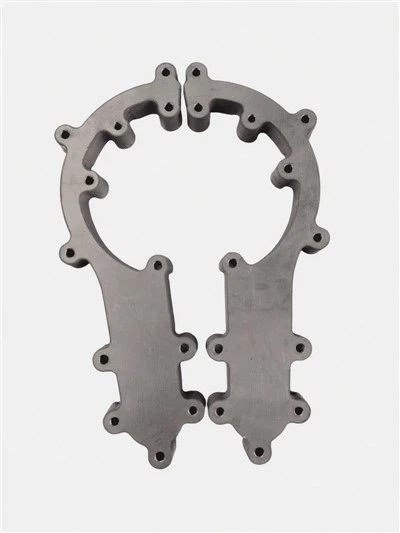

In the corrosive liquid-liquid heat exchange condition, the material and structural design of the heat exchange equipment directly determine the production efficiency, operating cost and equipment life. Relying on many years of experience in metal processing and heat exchanger manufacturing, Qinhao Metal has launched a series of titanium plate heat exchanger plate products, based on high-purity titanium material, combined with advanced runner design and sealing technology, to provide reliable and efficient heat exchange guarantee for chemical, desalination, metallurgy, electroplating, food and medicine and other fields.
Product overview
Titanium has excellent corrosion resistance, and has excellent corrosion resistance to chloride ions, sulfuric acid, seawater and a variety of organic acid media. All plates of Qinhao metal titanium heat exchanger are stamped and formed by high-quality titanium sheets, which are specially made for corrosive liquid-liquid heat exchange scenarios. Compared with traditional stainless steel or ordinary metal sheets, titanium sheets significantly reduce thickness while maintaining high strength, resulting in higher interplate-to-plate flow rates – which not only significantly improves the instantaneous heat transfer efficiency, but also effectively reduces the corrosion rate and scaling rate of the plate surface, extending the cleaning cycle and overall service life of the equipment.
High heat transfer efficiency means smaller heat transfer area requirements, saving you initial equipment investment while reducing long-term O&M costs. Qinhao Metal strictly follows the principle of thermodynamic optimization in design and manufacturing: under the condition of known temperature difference ratio (i.e., the ratio of the number of heat transfer units to NTUE), the model, process combination and heat transfer area of the heat exchanger are accurately calculated to ensure that the actual number of heat transfer units NTUP is exactly matched with the required NTUE, so as to achieve "on-demand design and precise heat exchange.
Core advantages
Streamline guide groove technology - uniform flow without dead ends
The plate inlet diverter area is specially designed with a streamlined guide groove. This structure can actively narrow the flow resistance difference between different flow channels, so that the fluid is evenly distributed before entering the core area of plate heat exchange. This fundamentally avoids the uneven flow distribution and flow "dead zone" phenomenon common in traditional designs, thus eliminating problems such as reduced heat transfer efficiency, pitting corrosion, and rapid dirt deposition caused by local overheating, overcooling, or stagnation.

International quality sealing system - snap button + convex section + double channel insurance
Sealing performance is the lifeblood of reliable operation of plate heat exchangers. Qin Hao Metal has upgraded the material selection and structure of the gasket:
International brand raw materials: All sealing gaskets are made of elastomer raw materials provided by international first-line brands, with excellent temperature resistance, chemical corrosion resistance and anti-aging properties, ensuring long-term service life.
Snap connection structure: Different from the ordinary embedding or bonding method used by most manufacturers, the snap structure can make the plate and gasket form a mechanical interlock, and the gasket will not shift or fall off during installation, which greatly improves the assembly reliability and on-site maintenance convenience.
Convex section design: The unique "convex" seal section generates a higher contact pressure per unit area during the compression process, which can adaptively compensate for the small deformation between plates, significantly enhancing the durability and safety of the seal.
Anti-cross-contamination design of the leakage area - safety upgrade
Between the hot and cold fluid channels, the plates of the metal and titanium heat exchangers are equipped with two independent inner seals. The gap between the two seals forms an open leak monitoring area and leads to a specially designed leak hole. Regardless of the accidental damage to the inner seal (cold or hot side) on either side, the leaking media first enters the leak zone and then safely exits the outside of the device through the leak hole and never mixes with each other. This design has critical safety value for processes that do not allow cross-contamination of hot and cold fluids, such as fine chemicals, food heating, pure water cooling, etc.
Structural principles
Qinhao metal titanium plate heat exchanger is made of a series of stamped titanium sheets with special corrugated plates. A closed runner is formed between each two adjacent plates through the surrounding gasket, and the plate group is locked by the frame and the pressing spiral heavy plastic. The four corner holes of each plate constitute the distribution main pipe and the collection main pipe of the fluid respectively, and at the same time, the cold and hot fluids are completely separated in their own independent flow channels by the reasonable arrangement of the gasket. The hot and cold media flow in reverse on both sides of the adjacent plates, allowing for efficient heat exchange through extremely thin titanium plates.
This structure allows the heat exchange area to be flexibly increased or decreased according to needs, and it is extremely convenient to disassemble and clean. The precision-engineered corrugation on the titanium plate not only increases the structural stiffness but also induces strong turbulence in the runner, greatly improving the surface heat transfer coefficient.
Optimize design and calculation guarantee
Qinhao Metal not only provides standard specifications of titanium heat exchanger plates, but also can perform customized thermal calculations according to the process parameters provided by customers (flow rate, inlet and outlet temperature, allowable pressure drop, medium corrosiveness, etc.). We use the mature heat transfer unit number (NTU) method to reasonably select the plate type, process combination and total heat transfer area under the premise of meeting NTUP = NTUE to ensure that the equipment is always in the efficient zone in actual operation, avoiding excessive margin or insufficient capacity.

Application fields
Chemical and pharmaceutical: acid/alkali cooling, solvent recovery, intermediate heat exchange
Desalination and ships: Seawater cooling, distilled water preheating
Metallurgy and electroplating: electrolyte cooling, waste acid heat recovery
Food and beverage: Juice sterilization and cooling, syrup heating
HVAC & Electric: Heat exchange for corrosive water
Hot Tags: titanium heat exchanger plate, China titanium heat exchanger plate manufacturers, suppliers, factory, Titanium Round Head Cross Screw, , , , , Titanium Tee