


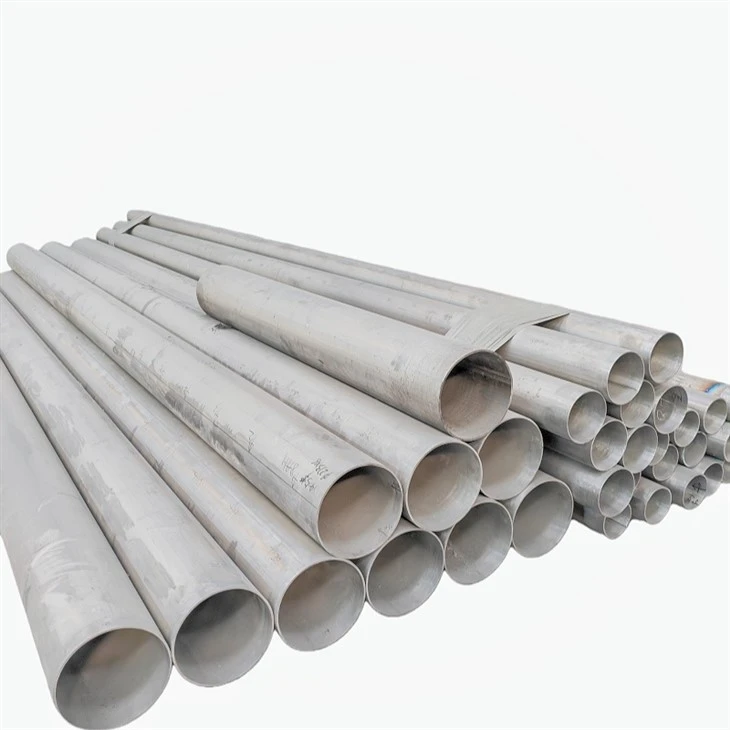
Products Description
Ι.Product Advantages
1.Titanium welded tubes offer superior appearance and quality compared to seamless titanium tubes. Manufactured by welding cold-rolled strip coils, they feature uniform wall thickness, excellent concentricity, and a smooth surface finish, minimizing internal scaling. This is particularly true for thin-walled titanium tubes, where seamless rolling processes cannot meet the technical requirements. While seamless titanium tubes produced via rolling or drawing processes struggle to achieve wall thicknesses below 1 mm, welded tubes can reach 0.5 mm or less, significantly reducing material consumption and costs. Additionally, the thinner walls of welded tubes enable higher heat transfer coefficients, resulting in superior heat transfer performance.
2.Titanium welded tubes offer distinct cost and environmental advantages. The production process for seamless titanium tubes is complex, typically involving multi-pass rolling or drawing of tube blanks using three-roll or multi-roll mills, followed by reduction in diameter and wall thickness to produce seamless tubes. This process exhibits low production efficiency and material yield. From sponge titanium to finished tubing, seamless titanium tubes undergo rolling or drawing, resulting in significant material waste and a yield rate of only about 50%. Furthermore, large-scale batch production is unfeasible, and the production cycle is relatively lengthy.
II. Process
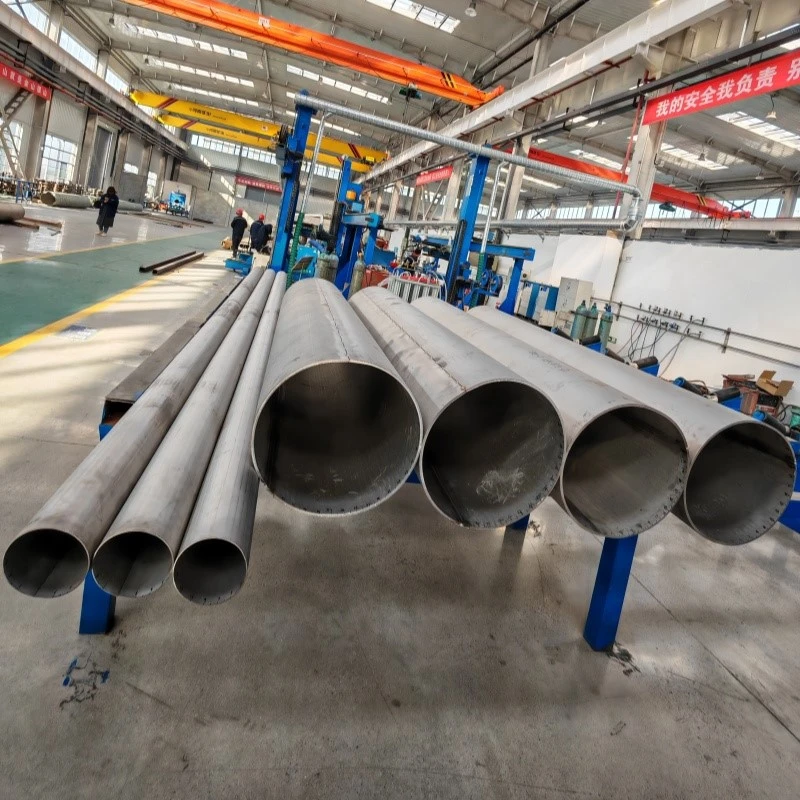
1. Raw Material Pre-treatment
Select titanium strips/coils that meet specifications. First perform surface treatment by acid pickling to remove scale, oil, and impurities. Then proceed with leveling and shearing to ensure a smooth surface and precise dimensions, laying the foundation for subsequent forming.
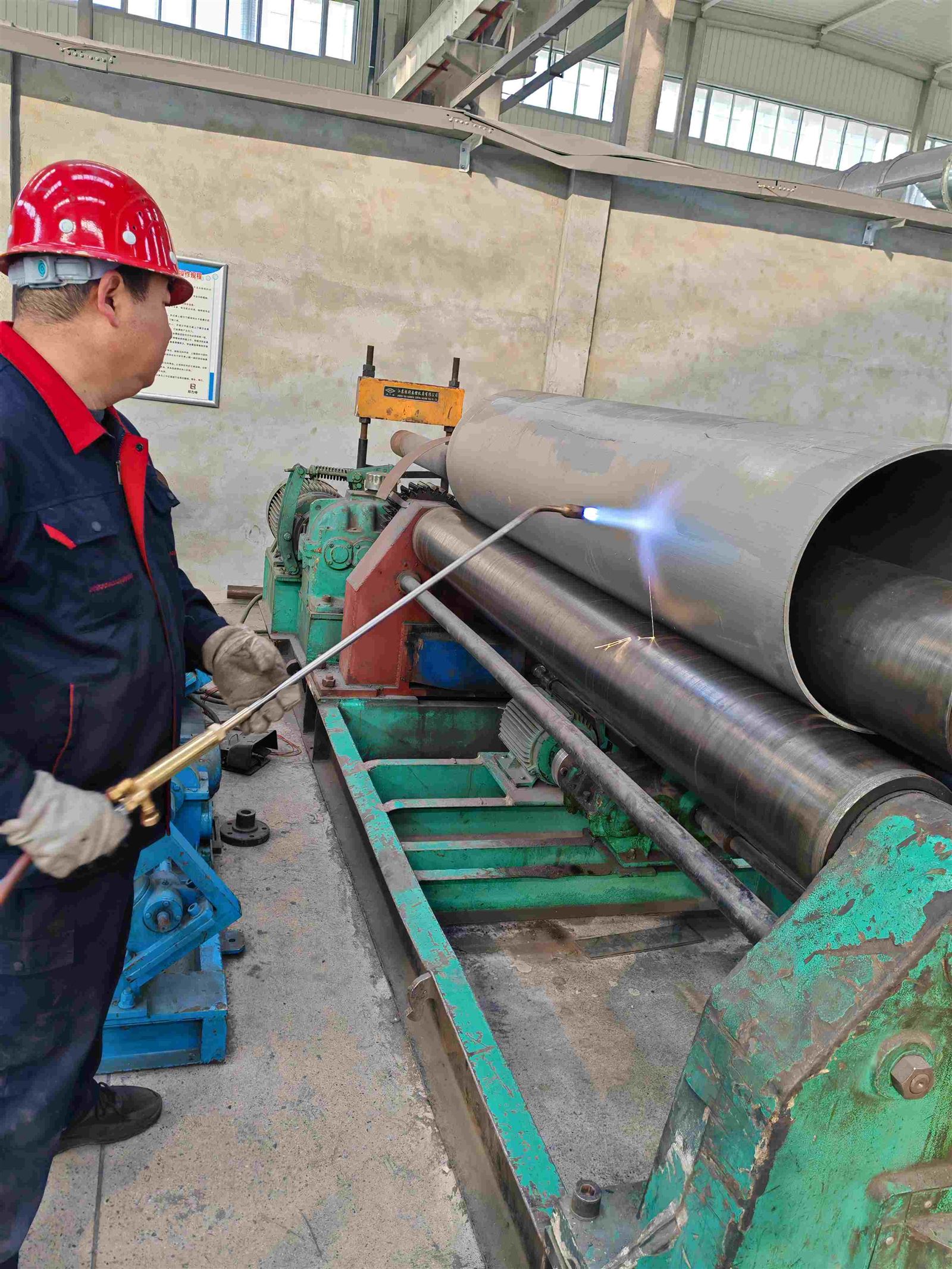
2. Roll Forming
The pretreated titanium strip is fed into a roll forming machine. Through sequential bending by multiple rollers, the strip is progressively formed into an open-ended tubular blank. Forming precision is strictly controlled to ensure uniform blank roundness and wall thickness, minimizing misalignment risks during welding.
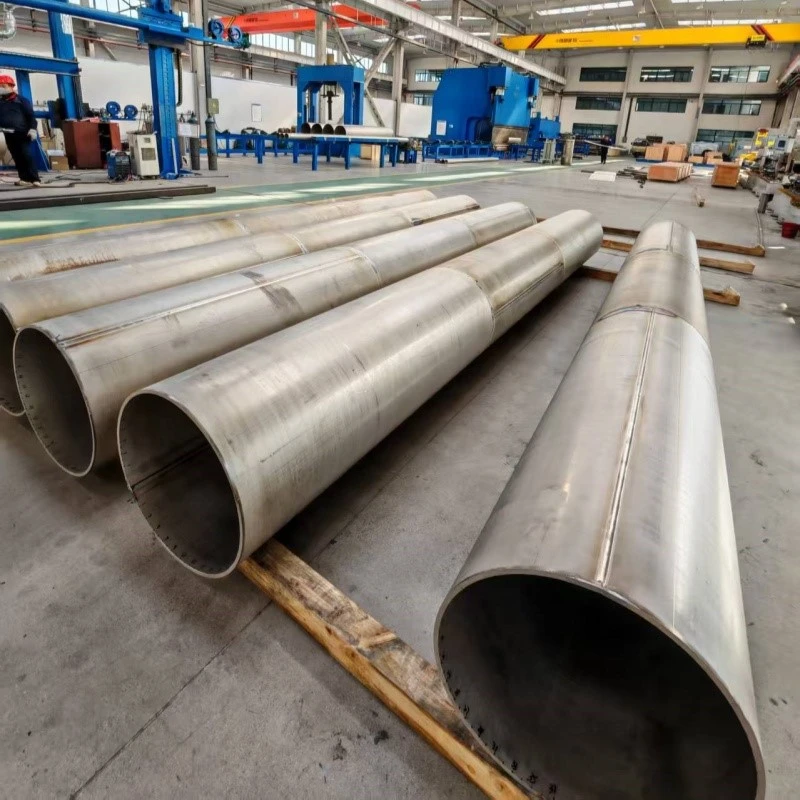
3. Gas-Shielded Welding
This constitutes the core process in titanium welded tube production. Tungsten inert gas (TIG) welding is employed, requiring continuous introduction of high-purity argon throughout the welding process. This provides comprehensive protection for the weld zone, weld back, and high-temperature areas, preventing reactions between titanium and atmospheric oxygen, nitrogen, or hydrogen that could generate brittle phases.
4. Weld Treatment and Non-Destructive Testing
Post-welding grinding ensures a smooth, uniform pipe surface. Non-destructive testing follows, commonly employing eddy current or ultrasonic methods to detect defects like cracks or lack of fusion, guaranteeing weld quality compliance.
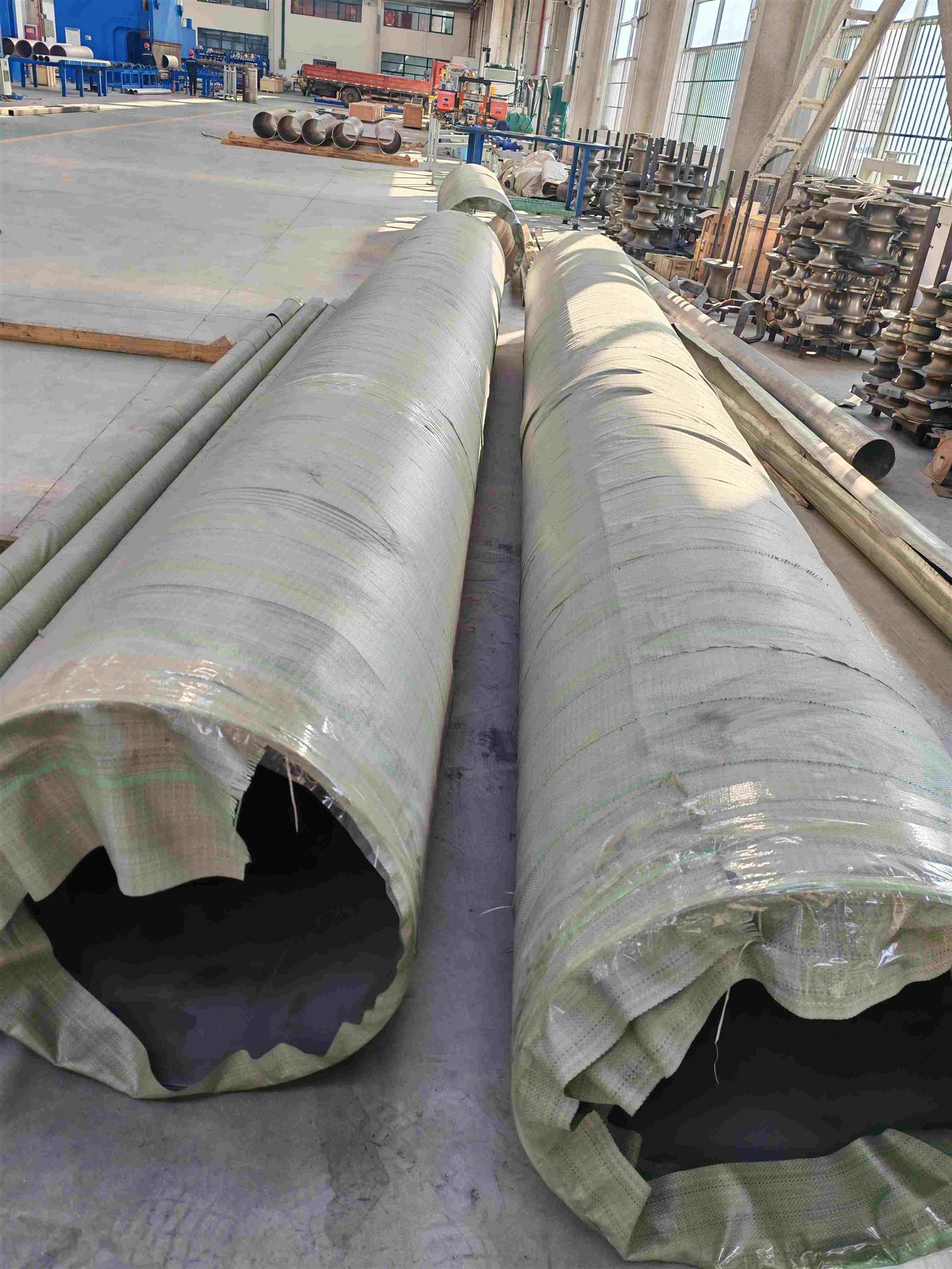
5. Final Inspection and Packaging
Dimension accuracy checks, hydrostatic pressure testing (pressure resistance), and corrosion resistance sampling are conducted. Qualified products undergo surface protection packaging to prevent scratches and oxidation during transportation.
III. Application Fields
1. Chemical and Petrochemical Industries
Used in pipeline systems transporting corrosive media such as strong acids, strong alkalis, and salt solutions, including sulfuric acid, hydrochloric acid, and caustic soda production lines. Also serves as heat exchange tubes for chemical reactors and heat exchangers, withstanding high-temperature and high-pressure corrosive environments to extend equipment service life.
2. Marine Engineering Sector
Used in reverse osmosis membrane casing pipelines for desalination plants, seawater transfer lines for offshore platforms, and pressure-resistant pipelines for subsea exploration equipment. Resists long-term seawater corrosion while offering lightweight properties that reduce installation loads at sea.
3. Aerospace Sector
Employed in hydraulic lines, fuel lines, and cooling lines for aircraft and spacecraft. Leveraging the lightweight and high-strength characteristics of titanium welded tubes, it reduces overall weight while withstanding high-altitude low-temperature and high-pressure environments.
4. Power Industry
Nuclear power plant coolant transfer pipes and thermal power plant condenser heat exchange tubes withstand corrosion from high-temperature steam and cooling water. Fluid transfer pipelines in new energy sectors (e.g., photovoltaic, wind power).
Hot Tags: high-quality industrial titanium alloy welding tube, China high-quality industrial titanium alloy welding tube manufacturers, suppliers, factory, titanium round tube, electron beam welding titanium, 5 16 titanium bolts, titanium wire for anodizing, 2 inch titanium tubing, titanium sprocket bolts


