

I. Product Advantages
1. Excellent plasticity and formability, easy to weld, with a high-temperature working temperature up to 300°C. Primarily used as a corrosion-resistant structural material, it offers superior corrosion resistance and oxidation resistance compared to most austenitic stainless steels; however, its heat resistance is relatively poor, so operating temperatures should not be excessively high.
2. Lightweight yet high-strength balance: Room-temperature tensile strength of approximately 500-600 MPa, yield strength of approximately 380-480 MPa, elongation ≥20%. Combines rigidity with plasticity, capable of withstanding certain impact loads.
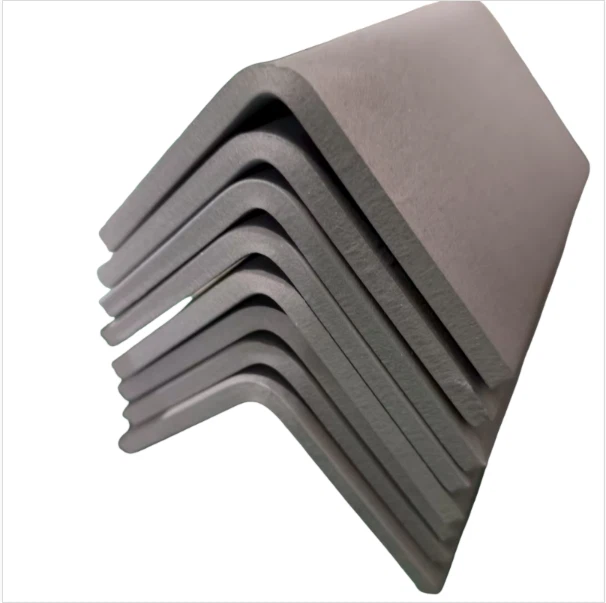
3. Excellent Machinability and Formability: The dimensional accuracy of angle steel cross-sections (equal-leg angle steel / unequal-leg angle steel) is easily controlled. Cross-section specifications can be customized as needed (e.g., flange width 20-100mm, flange thickness 3-12mm).
Superior Biocompatibility and Non-Magnetic Properties: Pure titanium exhibits no allergenicity or toxicity to human tissues, achieving medical-grade biocompatibility (though GR2 is primarily industrial-grade, its fundamental properties remain intact). It is completely non-magnetic and unaffected by magnetic fields.
II. Manufacturing Process
1. Raw Material Preparation: Strict Quality Control and Pre-treatment of Base Material
The raw material for titanium angle steel is typically GR2 titanium plate (thickness determined by angle steel specifications) or titanium strip coils. Pre-treatment is required to eliminate potential issues in subsequent processing:
- Remove scale, oil contamination, and scratches from the titanium plate surface.
- Cut to specified dimensions. Using plasma or laser cutting based on the angle steel's cross-sectional specifications, cut the titanium plate into required blanks (Note: Avoid oxyacetylene cutting, as high-temperature reactions between titanium and oxygen cause embrittlement). After cutting, grind burrs from the edges to ensure smooth surfaces.
2. Core Forming Process: Primarily Cold Bending / Hot Bending with Controlled Deformation Stress
Titanium's plastic deformation capability increases with temperature, but cold working readily induces work hardening. Select the forming method based on the angle steel's specifications (flange width, thickness).
4. Heat Treatment Process: After forming, titanium angle steel requires heat treatment to adjust properties. Core processes include intermediate annealing (during forming) and final heat treatment.
5. Surface Treatment: Acid pickling and passivation enhance corrosion resistance and appearance.
III. Applications
Marine Engineering: Support structures for seawater desalination equipment, guardrails for offshore platforms;
Chemical Industry: Supports for acid/alkali storage tanks, connecting frames for reactors;
Food & Pharmaceutical: Conveyor line racks for food processing, structural components for medical sterilization equipment;
Aerospace: Lightweight interior supports for aircraft cabins (non-load-bearing structures).

Hot Tags: gr2 pure titanium angle bar, China gr2 pure titanium angle bar manufacturers, suppliers, factory, Titanium Round Head Cross Screw, , , , , Titanium Tee