

Hey there! As a supplier of titanium elbows, I often get asked about the creep resistance of these products. So, I thought I'd take a moment to break it down for you.
First off, let's talk about what creep is. Creep is the slow, continuous deformation of a material under a constant load over time. It's like when you leave a heavy book on a soft table, and over time, the table starts to sag. In the world of materials, creep can be a big deal, especially in applications where a component needs to maintain its shape and strength over long periods under stress.
Now, titanium elbows are known for their excellent mechanical properties, and creep resistance is one of them. Titanium has a unique crystal structure and atomic bonding that gives it good resistance to creep. But the creep resistance of a titanium elbow can vary depending on a few factors.
Factors Affecting Creep Resistance
1. Alloy Composition
Not all titanium is created equal. Different titanium alloys have different compositions, and this can have a significant impact on creep resistance. For example, Gr5 Titanium Flange is a very popular alloy. It contains about 6% aluminum and 4% vanadium. These alloying elements help to strengthen the titanium and improve its creep resistance. They form a fine-grained structure that makes it harder for the atoms to move around under stress, reducing the likelihood of creep.
On the other hand, Gr1 Titanium Flange is a commercially pure titanium. It has good corrosion resistance but generally lower creep resistance compared to alloyed titanium. This is because the pure titanium has a more uniform and less complex atomic structure, which allows atoms to move more easily under load.
2. Temperature
Temperature plays a huge role in creep. As the temperature increases, the atoms in the titanium have more energy, and they can move around more freely. This means that at higher temperatures, the creep rate of a titanium elbow will increase. For most titanium alloys, the creep becomes more significant at temperatures above about 300°C (572°F).
However, some special titanium alloys are designed to have better creep resistance at high temperatures. For example, GR12 Titanium Machining Parts contains small amounts of molybdenum and nickel, which help to improve its high-temperature properties, including creep resistance. So, if you're using a titanium elbow in a high-temperature application, you'll want to choose an alloy that can handle the heat.
3. Stress Level
The amount of stress applied to the titanium elbow also affects creep. The higher the stress, the faster the creep rate. If a titanium elbow is subjected to a very high load for a long time, it's more likely to experience significant creep deformation. That's why it's important to design the system properly and make sure the titanium elbow is not overstressed.
Testing Creep Resistance
To determine the creep resistance of a titanium elbow, manufacturers use specialized testing equipment. The most common test is the creep test, where a sample of the titanium is subjected to a constant load at a specific temperature for a set period of time. The deformation of the sample is measured over time, and this data is used to calculate the creep rate.
The results of these tests are usually presented in the form of a creep curve, which shows how the deformation of the titanium changes over time. By analyzing these curves, engineers can predict how a titanium elbow will perform under different conditions and choose the right alloy for a particular application.
Applications of Titanium Elbows with Good Creep Resistance
Titanium elbows with high creep resistance are used in a variety of industries. In the aerospace industry, for example, they are used in aircraft engines and exhaust systems. These components are exposed to high temperatures and stresses for long periods of time, so it's crucial that the titanium elbows can maintain their shape and strength.
In the chemical processing industry, titanium elbows are used in pipelines that carry corrosive fluids at high temperatures and pressures. The good creep resistance of the titanium ensures that the elbows won't deform over time, preventing leaks and maintaining the integrity of the system.
Why Choose Our Titanium Elbows
As a supplier, we take pride in offering high-quality titanium elbows with excellent creep resistance. We carefully select the alloys based on the specific requirements of our customers. Whether you need a pure titanium elbow for a corrosion-resistant application or an alloyed titanium elbow for high-temperature and high-stress environments, we've got you covered.
Our manufacturing process is also top-notch. We use advanced machining and heat treatment techniques to ensure that the titanium elbows have the right microstructure and mechanical properties. This helps to maximize their creep resistance and overall performance.
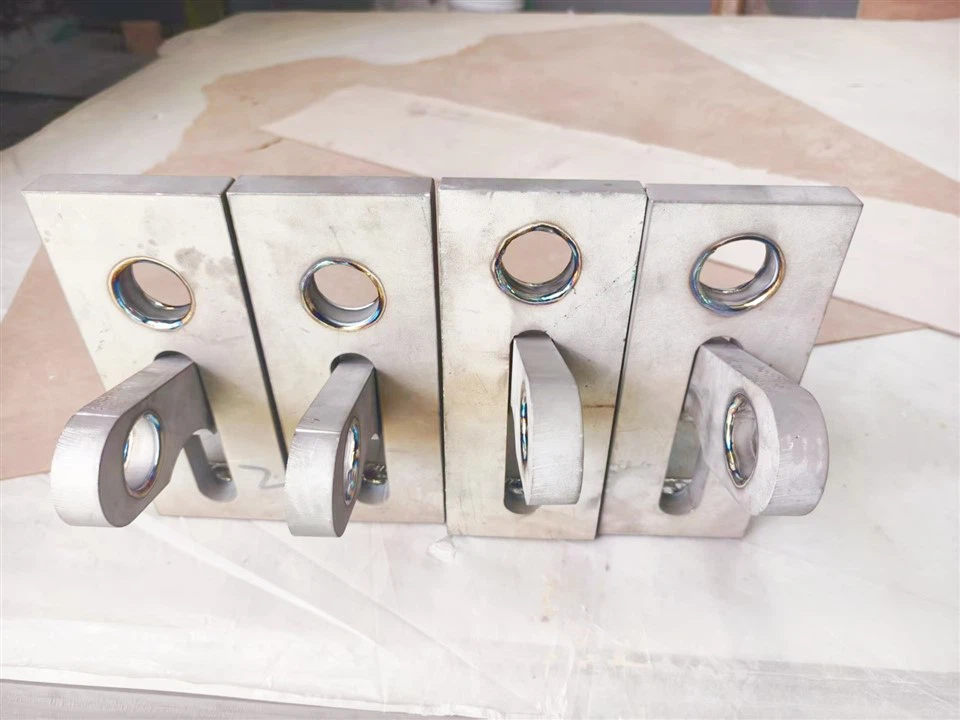

If you're in the market for titanium elbows and want to learn more about our products, or if you have specific requirements for creep resistance in your application, don't hesitate to reach out. We're here to help you find the perfect solution for your needs. Contact us today to start the conversation and discuss your procurement options.
References
- "Titanium: A Technical Guide" by John R. Gilbert
- "Materials Science and Engineering: An Introduction" by William D. Callister Jr. and David G. Rethwisch