

Zirconium is a remarkable metal known for its exceptional corrosion resistance, high melting point, and low neutron absorption cross - section, making it highly valuable in various industries, including nuclear, chemical, and aerospace. Among zirconium products, Zr1 Zirconium Rod is one of the most commonly used forms. As a Zr1 Zirconium Rod supplier, I have witnessed firsthand the importance of understanding the impact of impurities on these rods.
Understanding Zr1 Zirconium Rod
Zr1 Zirconium Rod is a high - purity zirconium product that conforms to specific industry standards. The "Zr1" designation typically indicates a certain level of purity and specific chemical composition. It is widely used in applications where its unique properties can be fully exploited. For instance, in the nuclear industry, zirconium rods are used as cladding materials for nuclear fuel due to their low neutron absorption. In the chemical industry, they are used in equipment exposed to highly corrosive environments because of their excellent corrosion resistance.
Types of Impurities in Zr1 Zirconium Rod
Impurities in Zr1 Zirconium Rod can come from various sources. During the extraction and refining process of zirconium, trace elements such as iron (Fe), silicon (Si), titanium (Ti), and hafnium (Hf) may remain in the final product. These impurities can be classified into metallic and non - metallic impurities.

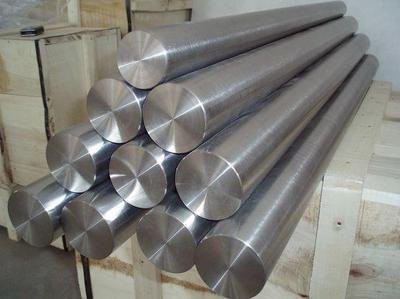
Metallic impurities like iron can form intermetallic compounds with zirconium. These compounds may have different physical and chemical properties compared to pure zirconium. For example, iron - zirconium intermetallics can affect the mechanical properties of the rod. Non - metallic impurities such as oxygen, nitrogen, and carbon can also be present. Oxygen can dissolve in the zirconium lattice, leading to changes in the crystal structure and properties of the rod.
Effects of Impurities on Physical Properties
Density
The presence of impurities can alter the density of Zr1 Zirconium Rod. Different elements have different atomic masses, and when they are incorporated into the zirconium matrix, the overall mass - to - volume ratio of the rod changes. For example, if a heavy element like hafnium is present as an impurity, it will increase the density of the rod. This change in density can be significant in applications where precise mass calculations are required, such as in aerospace components.
Melting Point
Impurities can also lower the melting point of Zr1 Zirconium Rod. When foreign elements are added to the zirconium lattice, they disrupt the regular arrangement of zirconium atoms. This makes it easier for the atoms to break free from their lattice positions at lower temperatures. A lower melting point can be a problem in high - temperature applications, as the rod may not be able to withstand the intended operating temperatures.
Effects of Impurities on Mechanical Properties
Hardness and Strength
Some impurities can increase the hardness and strength of Zr1 Zirconium Rod. For example, the addition of small amounts of titanium can act as a strengthening agent. Titanium atoms can form solid solutions with zirconium, which can impede the movement of dislocations within the crystal structure. However, excessive amounts of impurities can have the opposite effect. They can cause embrittlement, reducing the ductility and toughness of the rod. This means that the rod is more likely to fracture under stress rather than deform plastically.
Ductility
Ductility is an important property for zirconium rods, especially in applications where the rod needs to be formed into different shapes. Impurities can reduce the ductility of the rod. Intermetallic compounds formed by impurities can act as stress concentrators, causing cracks to initiate and propagate more easily. As a result, the rod may not be able to undergo significant plastic deformation without breaking.
Effects of Impurities on Corrosion Resistance
General Corrosion
In general, impurities can have a negative impact on the corrosion resistance of Zr1 Zirconium Rod. Some impurities can act as cathodic or anodic sites in the presence of a corrosive environment. For example, iron impurities can form galvanic cells with zirconium, accelerating the corrosion process. The formation of these cells can lead to pitting corrosion, where small holes or pits form on the surface of the rod.
Stress - Corrosion Cracking
Stress - corrosion cracking (SCC) is a serious concern in zirconium applications. Impurities can increase the susceptibility of Zr1 Zirconium Rod to SCC. They can promote the formation of micro - cracks at the grain boundaries or within the grains. When combined with tensile stress in a corrosive environment, these micro - cracks can grow and eventually lead to the failure of the rod.
Effects of Impurities on Nuclear Properties
In nuclear applications, the presence of impurities in Zr1 Zirconium Rod can be particularly critical. Hafnium is an impurity that has a high neutron absorption cross - section. Even small amounts of hafnium in the rod can significantly increase the neutron absorption rate. This can reduce the efficiency of the nuclear reactor and increase the risk of neutron - induced reactions.
Controlling Impurities in Zr1 Zirconium Rod
As a Zr1 Zirconium Rod supplier, we take several measures to control the level of impurities in our products. We use advanced refining techniques, such as the Kroll process followed by electron - beam melting, to purify zirconium. These processes can effectively reduce the concentration of most impurities. We also conduct strict quality control tests at every stage of the production process to ensure that the impurity levels meet the required standards.
Comparing with Other Zirconium Rods
When comparing Zr1 Zirconium Rod with Zr2 Zirconium Rod and Zr3 Zirconium Rod, the impurity levels and their effects can vary. Zr2 and Zr3 may have different chemical compositions and impurity tolerances. For example, Zr2 may have a slightly higher tolerance for certain impurities, which can make it more suitable for less demanding applications. On the other hand, Zr1 is typically used in high - performance applications where low impurity levels are crucial.
Conclusion
In conclusion, impurities can have a wide range of effects on Zr1 Zirconium Rod. They can affect the physical, mechanical, corrosion - resistant, and nuclear properties of the rod. As a Zr1 Zirconium Rod supplier, we understand the importance of minimizing these impurities to ensure the high quality and performance of our products. If you are in need of high - quality Zr1 Zirconium Rods for your specific applications, we invite you to contact us for procurement discussions. We are committed to providing you with the best - quality products that meet your exact requirements.
References
- E. O. Hall, "The Cleavage Strength of Polycrystals", Proceedings of the Physical Society B, 1951.
- N. J. Petch, "The Cleavage Strength of Polycrystals", Journal of the Iron and Steel Institute, 1953.
- ASM Handbook Committee, "ASM Handbook Volume 2: Properties and Selection: Nonferrous Alloys and Special - Purpose Materials", ASM International, 1990.