

As a supplier of Zr1 Zirconium Rod, I often receive inquiries about various technical specifications of our products. One of the frequently asked questions is about the straightness tolerance of Zr1 Zirconium Rod. In this blog post, I'll delve into what straightness tolerance means, why it matters for Zr1 Zirconium Rod, and the typical straightness tolerance standards we adhere to.
Understanding Straightness Tolerance
Straightness tolerance is a geometric tolerance that controls the straightness of a feature, in this case, the Zr1 Zirconium Rod. It defines the allowable deviation from a perfectly straight line. In manufacturing, achieving absolute straightness is almost impossible due to various factors such as the material properties, the manufacturing process, and handling during production. Therefore, straightness tolerance sets a range within which the rod can deviate from a theoretical straight line and still be considered acceptable for its intended use.
Imagine a Zr1 Zirconium Rod as an ideal straight line in a three - dimensional space. The straightness tolerance zone is a two - parallel line or a cylindrical zone (depending on the application) within which the centerline of the actual rod must lie. If the rod's centerline falls outside this tolerance zone, it is considered non - compliant.
Importance of Straightness Tolerance for Zr1 Zirconium Rod
Zr1 Zirconium Rod has a wide range of applications, especially in industries such as nuclear, chemical, and aerospace. In the nuclear industry, Zr1 Zirconium Rods are often used as fuel cladding tubes. A rod with poor straightness can lead to uneven heat distribution, which may cause local overheating and potentially damage the fuel elements. This can have serious safety implications for the nuclear reactor.
In the chemical industry, Zr1 Zirconium Rods are used in corrosive environments. If the rod is not straight, it may cause stress concentrations when installed in equipment. These stress concentrations can accelerate corrosion and reduce the service life of the equipment.
In aerospace applications, Zr1 Zirconium Rods are used in structural components. The straightness of the rod is crucial for maintaining the structural integrity of the aircraft. A non - straight rod can introduce unexpected forces and moments, which may compromise the safety of the flight.
Factors Affecting the Straightness of Zr1 Zirconium Rod
Material Properties
The inherent properties of zirconium, such as its ductility and elasticity, can affect the straightness during manufacturing. Zirconium has a relatively high strength - to - weight ratio, but it also has a certain degree of plasticity. During the hot - rolling or cold - drawing process, the material may deform unevenly, leading to deviations from straightness.
Manufacturing Process
The manufacturing process of Zr1 Zirconium Rod plays a significant role in determining its straightness. For example, in the hot - rolling process, if the temperature distribution is not uniform across the rod, it can cause uneven expansion and contraction, resulting in bending. Similarly, in the cold - drawing process, improper die design or excessive drawing force can also lead to non - straight rods.

Handling and Storage
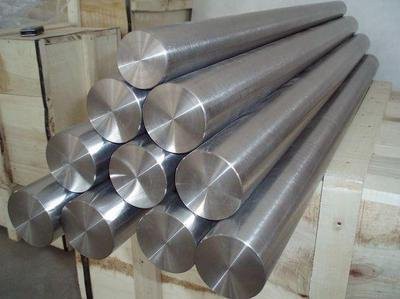
After manufacturing, improper handling and storage can also affect the straightness of the Zr1 Zirconium Rod. If the rods are stacked in an uneven way or subjected to external forces during transportation, they may become bent.
Typical Straightness Tolerance Standards for Zr1 Zirconium Rod
The straightness tolerance standards for Zr1 Zirconium Rod can vary depending on the application and customer requirements. Generally, for high - precision applications, the straightness tolerance can be as strict as ±0.1mm per meter. In some general industrial applications, the tolerance may be relaxed to ±0.5mm per meter or even more.
We, as a Zr1 Zirconium Rod supplier, follow international standards and customer - specified requirements to ensure the straightness of our products. Our quality control team uses advanced measuring instruments such as laser measuring devices and coordinate measuring machines (CMM) to accurately measure the straightness of each rod. Before delivery, every Zr1 Zirconium Rod is inspected to ensure it meets the required straightness tolerance.
Comparison with Other Zirconium Rods
When comparing Zr1 Zirconium Rod with other zirconium rods such as Zr2 Zirconium Rod and Zr5 Zirconium rod, the straightness tolerance requirements are generally similar in principle. However, due to differences in chemical composition and application scenarios, the specific tolerance values may vary.
Zr2 Zirconium Rod has a different chemical composition compared to Zr1, which may result in different material properties during manufacturing. This can potentially affect the achievable straightness and the corresponding tolerance requirements. Zr5 Zirconium rod, on the other hand, may be used in different applications with different precision requirements, so its straightness tolerance may also differ.
Our Quality Assurance Measures
At our company, we have a comprehensive quality control system in place to ensure the straightness of our Zr1 Zirconium Rod. We start with high - quality raw materials and use advanced manufacturing processes. During the production process, we conduct in - process inspections at multiple stages to detect any potential straightness issues early.
Our final inspection is carried out using state - of - the - art measuring equipment. We also keep detailed records of each rod's straightness measurement results, which can be provided to our customers upon request. If a rod fails to meet the straightness tolerance requirements, it will be re - processed or discarded.
Contact Us for Purchase and Negotiation
If you are in need of high - quality Zr1 Zirconium Rod with strict straightness tolerance control, we are here to serve you. Our team of experts can provide you with detailed technical information and customized solutions based on your specific requirements. Whether you need a small quantity for research purposes or a large - scale supply for industrial production, we have the capacity and expertise to meet your needs. Contact us today to start the negotiation process and ensure that you get the best Zr1 Zirconium Rod for your application.
References
- "Geometric Dimensioning and Tolerancing Handbook" by Thomas J. Schneider
- "Zirconium and Its Alloys: Properties, Processing, and Applications" edited by J. R. Weir
- Industry standards related to zirconium products, such as ASTM standards for zirconium rods.