

As a seasoned supplier of Titanium Elbow, I often encounter various technical inquiries from customers. One question that frequently arises is about the Poisson's ratio of a titanium elbow. In this blog post, I will delve into this topic, exploring what Poisson's ratio is, its significance in the context of titanium elbows, and how it affects the performance of these components.
Understanding Poisson's Ratio
Poisson's ratio is a fundamental material property that describes the relationship between the transverse strain and the axial strain of a material when it is subjected to an axial load. When a material is stretched or compressed in one direction (axial direction), it will also deform in the perpendicular directions (transverse directions). Poisson's ratio, denoted by the Greek letter ν (nu), is defined as the negative ratio of the transverse strain (ε_transverse) to the axial strain (ε_axial):
ν = -ε_transverse / ε_axial

For most materials, Poisson's ratio ranges between 0 and 0.5. A value of 0 indicates that the material does not contract or expand transversely when subjected to an axial load, while a value of 0.5 implies that the volume of the material remains constant during deformation, which is the case for an ideal incompressible material.
Poisson's Ratio of Titanium
Titanium is a widely used metal in various industries due to its excellent properties, such as high strength-to-weight ratio, corrosion resistance, and biocompatibility. The Poisson's ratio of pure titanium typically ranges from 0.32 to 0.34. This value can vary slightly depending on the specific grade of titanium, its processing history, and the temperature at which it is tested.
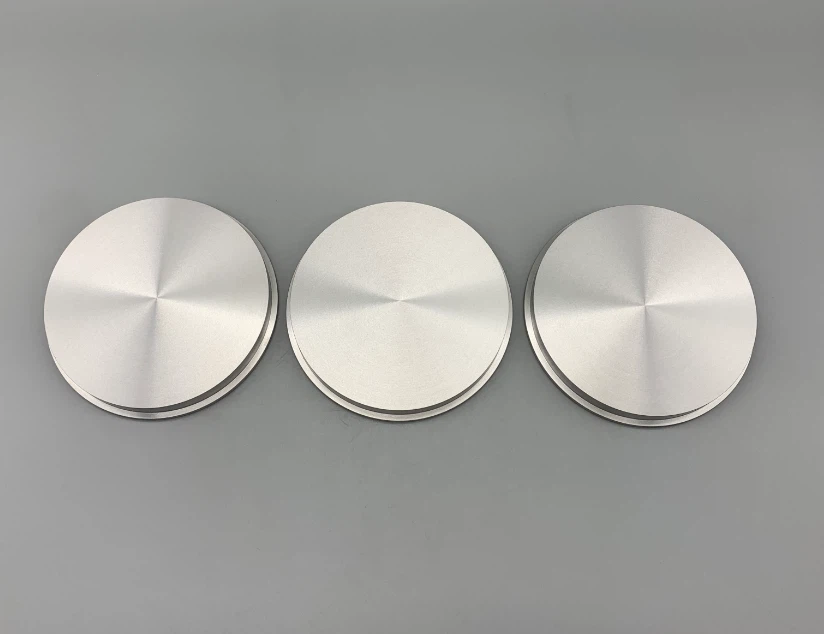
For example, commercially pure titanium (CP titanium) grades, such as Grade 2 titanium, have a Poisson's ratio close to 0.34. GR2 Titanium Target, which is made of Grade 2 titanium, shares this typical Poisson's ratio value. Titanium alloys, on the other hand, may have different Poisson's ratios depending on the alloying elements and their concentrations.
Significance of Poisson's Ratio in Titanium Elbows
In the context of titanium elbows, Poisson's ratio plays a crucial role in determining the mechanical behavior and performance of these components. When a titanium elbow is subjected to internal pressure or external loads, it experiences both axial and transverse stresses and strains. The Poisson's ratio affects how the elbow deforms under these loads, which in turn influences its strength, durability, and resistance to failure.
Deformation and Stress Distribution
The Poisson's ratio of titanium affects the way the elbow deforms when it is subjected to an axial load. For instance, when an axial force is applied to the elbow, the material will contract transversely according to its Poisson's ratio. This transverse contraction can lead to changes in the shape and dimensions of the elbow, which may affect its fit and function in a piping system.
Moreover, the Poisson's ratio also influences the stress distribution within the elbow. The transverse deformation caused by the Poisson's effect can induce additional stresses in the material, which need to be considered in the design and analysis of the elbow to ensure its structural integrity.
Fatigue and Fracture Resistance
The Poisson's ratio can also have an impact on the fatigue and fracture resistance of titanium elbows. Fatigue failure occurs when a material is subjected to repeated cyclic loads, leading to the initiation and propagation of cracks. The Poisson's effect can affect the stress concentration at the crack tip, which in turn influences the crack growth rate and the fatigue life of the elbow.
In addition, the Poisson's ratio can also affect the fracture toughness of the material. Fracture toughness is a measure of a material's resistance to crack propagation under a given stress. A higher Poisson's ratio may result in a more favorable stress distribution around a crack, which can enhance the fracture toughness of the titanium elbow.
Factors Affecting the Poisson's Ratio of Titanium Elbows
While the Poisson's ratio of titanium is relatively stable, there are several factors that can affect the Poisson's ratio of titanium elbows. These factors include:
Processing and Manufacturing
The processing and manufacturing methods used to produce titanium elbows can have an impact on their Poisson's ratio. For example, cold working, such as bending or forming, can introduce residual stresses and microstructural changes in the material, which may affect its mechanical properties, including the Poisson's ratio.
Temperature
The Poisson's ratio of titanium is also temperature-dependent. As the temperature increases, the atomic mobility in the material increases, which can lead to a decrease in the Poisson's ratio. Therefore, the operating temperature of the titanium elbow needs to be considered when evaluating its Poisson's ratio and mechanical performance.
Alloy Composition
As mentioned earlier, the alloy composition of titanium can affect its Poisson's ratio. Different alloying elements can have different effects on the crystal structure and mechanical properties of titanium, which can result in variations in the Poisson's ratio. For example, titanium alloys containing aluminum or vanadium may have different Poisson's ratios compared to pure titanium.
Measuring the Poisson's Ratio of Titanium Elbows
To accurately determine the Poisson's ratio of a titanium elbow, several testing methods can be used. One common method is the uniaxial tensile test, where a specimen of the titanium elbow is subjected to a controlled axial load while the axial and transverse strains are measured using strain gauges or extensometers. The Poisson's ratio can then be calculated from the measured strains using the formula mentioned earlier.
Another method is the ultrasonic testing method, which measures the velocity of ultrasonic waves in the material. The Poisson's ratio can be determined from the relationship between the longitudinal and transverse wave velocities.
Application of Poisson's Ratio in the Design of Titanium Elbows
In the design of titanium elbows, the Poisson's ratio is an important parameter that needs to be considered to ensure the optimal performance and reliability of these components. Engineers use the Poisson's ratio in conjunction with other material properties, such as Young's modulus and yield strength, to perform stress analysis and structural design calculations.

For example, in the design of a piping system, the Poisson's ratio of the titanium elbow is used to calculate the stress and deformation of the elbow under different operating conditions, such as internal pressure, external loads, and thermal expansion. This information is then used to select the appropriate size, thickness, and grade of the titanium elbow to ensure that it can withstand the expected loads and operating conditions without failure.
Conclusion
In conclusion, the Poisson's ratio of a titanium elbow is a critical material property that affects its mechanical behavior, performance, and design. As a supplier of Titanium Elbow, I understand the importance of providing accurate information about the Poisson's ratio and other material properties to our customers. By considering the Poisson's ratio and other factors, we can help our customers select the right titanium elbow for their specific applications and ensure the long-term reliability and performance of their systems.
If you are interested in purchasing titanium elbows or have any questions about their Poisson's ratio or other technical aspects, please feel free to contact us. We are committed to providing high-quality products and excellent customer service, and we look forward to discussing your needs and finding the best solutions for you.
References
- Callister, W. D., & Rethwisch, D. G. (2018). Materials Science and Engineering: An Introduction. Wiley.
- ASM Handbook, Volume 2: Properties and Selection: Nonferrous Alloys and Special-Purpose Materials. ASM International.
- Titanium: A Technical Guide. ASM International.