

Hey there! As a supplier of titanium welding pipes, I often get asked about the heat-transfer properties of these pipes. So, I thought I'd write a blog post to share some insights on this topic.
First off, let's talk about what heat transfer is. Heat transfer is the movement of thermal energy from one place to another. There are three main ways heat can be transferred: conduction, convection, and radiation. In the context of titanium welding pipes, conduction is the most relevant mode of heat transfer.
Titanium is known for its excellent corrosion resistance, high strength-to-weight ratio, and biocompatibility. But how does it perform when it comes to heat transfer? Well, titanium has a relatively low thermal conductivity compared to some other metals like copper and aluminum. Thermal conductivity is a measure of how well a material can conduct heat. A lower thermal conductivity means that heat doesn't flow through the material as easily.
For titanium welding pipes, this lower thermal conductivity can be both an advantage and a disadvantage, depending on the application. Let's start with the advantages.
Advantages of Low Thermal Conductivity
One of the big benefits is in applications where you want to minimize heat loss or gain. For example, in some chemical processing plants, titanium welding pipes are used to transport fluids at specific temperatures. The low thermal conductivity of titanium helps to keep the fluid's temperature stable as it moves through the pipes. This is crucial because many chemical reactions are temperature-sensitive, and even a small change in temperature can affect the reaction rate and the quality of the final product.
Another advantage is in situations where you need to prevent heat from spreading to other parts of a system. In aerospace applications, titanium welding pipes are often used to carry fuel or hydraulic fluids. The low thermal conductivity helps to contain the heat generated by the fluid within the pipes, reducing the risk of overheating other components in the aircraft.
Disadvantages of Low Thermal Conductivity
On the flip side, the low thermal conductivity can be a drawback in applications where efficient heat transfer is required. For instance, in heat exchangers, the goal is to transfer heat from one fluid to another as quickly as possible. Metals with high thermal conductivity, like copper, are often preferred for heat exchanger tubes because they can transfer heat more efficiently. Titanium's lower thermal conductivity means that it might not be the best choice for applications where rapid heat transfer is the top priority.
However, it's important to note that advancements in technology have allowed for the development of titanium alloys and manufacturing processes that can improve the heat-transfer properties of titanium welding pipes. For example, by using specific alloying elements and heat treatment methods, it's possible to increase the thermal conductivity of titanium to some extent.
Now, let's take a look at some of the different types of titanium welding pipes we offer and how their heat-transfer properties might vary.
Gr5 Titanium Welding Pipe
The Gr5 Titanium Welding Pipe is one of our popular products. Gr5 titanium, also known as Ti-6Al-4V, is a widely used titanium alloy. It has good mechanical properties and corrosion resistance. In terms of heat transfer, its thermal conductivity is still relatively low compared to some other metals, but it's suitable for many applications where a balance between strength, corrosion resistance, and heat management is needed.
High - Quality Industrial Titanium Alloy Welding Tube
Our High - Quality Industrial Titanium Alloy Welding Tube is designed for various industrial applications. Depending on the specific alloy composition, the heat-transfer properties can be tailored to meet different requirements. Some of these alloys might have slightly improved thermal conductivity compared to pure titanium, making them more suitable for applications where better heat transfer is desired.
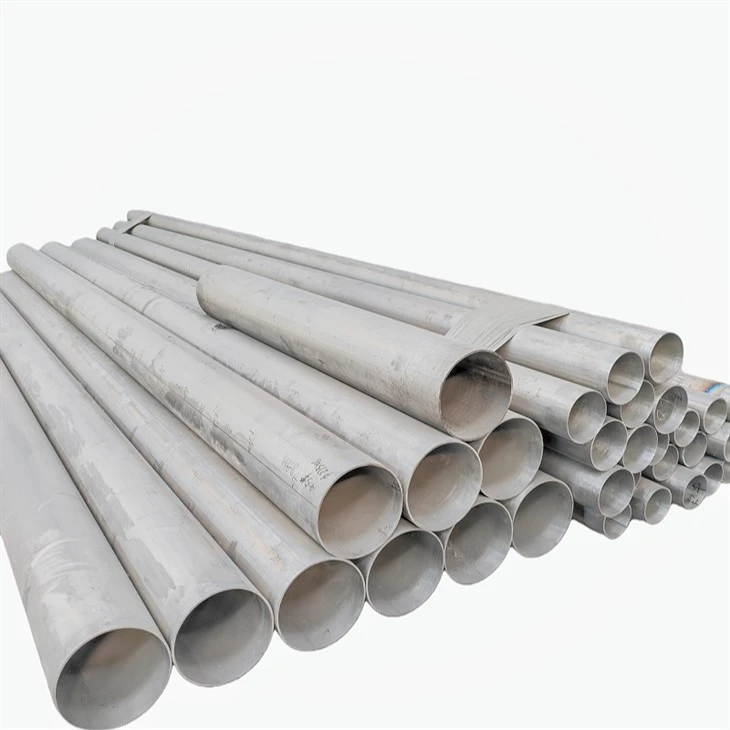

Gr12 Titanium Weldeing Pipe
The Gr12 Titanium Weldeing Pipe is another option. Gr12 titanium alloy contains elements like molybdenum and nickel, which can affect its heat-transfer properties. It generally has good corrosion resistance and can be used in applications where heat transfer needs to be carefully controlled, such as in the oil and gas industry.
When choosing a titanium welding pipe for your application, it's important to consider not only the heat-transfer properties but also other factors like corrosion resistance, mechanical strength, and cost. You need to find the right balance based on your specific requirements.
If you're in the market for titanium welding pipes and have questions about heat transfer or any other aspect, don't hesitate to reach out. We're here to help you find the best solution for your needs. Whether you're working on a chemical processing project, an aerospace application, or an industrial manufacturing process, we can provide you with high-quality titanium welding pipes that meet your specifications.
In conclusion, while titanium welding pipes have a relatively low thermal conductivity compared to some other metals, they offer unique advantages in terms of heat management in many applications. With the right alloy selection and manufacturing processes, you can get the most out of these pipes for your specific heat-transfer needs. So, if you're looking for reliable titanium welding pipes, give us a shout and let's start a conversation about your project.
References
- "Titanium: A Technical Guide" by John C. Williams
- "Heat Transfer" by Frank P. Incropera and David P. DeWitt