

As a supplier of zirconium rods, I often encounter inquiries from customers regarding various aspects of our products. One question that frequently comes up is about the cross - sectional area of a zirconium rod. In this blog post, I'll delve into what the cross - sectional area of a zirconium rod is, how it's calculated, and why it matters in different applications.
Understanding Cross - Sectional Area
The cross - sectional area of a zirconium rod refers to the area of the shape obtained when the rod is cut perpendicular to its length. For a zirconium rod, which is typically cylindrical in shape, the cross - section is a circle. The concept of cross - sectional area is crucial as it influences many physical properties and performance characteristics of the rod.
Calculating the Cross - Sectional Area of a Cylindrical Zirconium Rod
The formula for calculating the area of a circle, which represents the cross - section of a cylindrical zirconium rod, is (A=\pi r^{2}), where (A) is the cross - sectional area, (\pi) is a mathematical constant approximately equal to 3.14159, and (r) is the radius of the circular cross - section.
Let's say we have a zirconium rod with a radius of (r = 5) millimeters. Using the formula (A=\pi r^{2}), we substitute the value of (r) into the equation:
[
\begin{align*}
A&=\pi\times(5)^{2}\
&= 3.14159\times25\
&=78.53975\space mm^{2}
\end{align*}
]
If the diameter (d) of the rod is given instead of the radius, we first need to find the radius by using the relationship (r=\frac{d}{2}). For example, if the diameter of a zirconium rod is (d = 10) millimeters, then (r=\frac{10}{2}=5) millimeters, and we can calculate the cross - sectional area using the same formula as above.
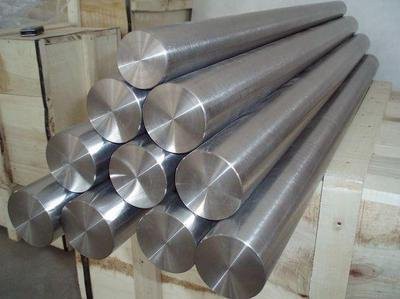

Importance of Cross - Sectional Area in Different Applications
1. Electrical Conductivity
In electrical applications, the cross - sectional area of a zirconium rod plays a vital role. According to Ohm's law, the resistance (R) of a conductor is inversely proportional to its cross - sectional area (A). The formula for resistance is (R=\rho\frac{l}{A}), where (\rho) is the resistivity of the material (zirconium in this case), (l) is the length of the rod, and (A) is the cross - sectional area. A larger cross - sectional area means lower resistance, allowing for better electrical conductivity. This is important in applications such as electrical contacts or conductors where minimizing resistance is crucial for efficient power transmission.
2. Mechanical Strength
The cross - sectional area also affects the mechanical strength of the zirconium rod. When a rod is subjected to a load, the stress (\sigma) on the rod is given by the formula (\sigma=\frac{F}{A}), where (F) is the applied force and (A) is the cross - sectional area. A larger cross - sectional area can withstand a greater force without experiencing excessive stress, making the rod stronger and more resistant to deformation or failure. This is important in structural applications where the rod needs to support heavy loads.
3. Heat Transfer
In heat transfer applications, the cross - sectional area influences the rate of heat conduction. Fourier's law of heat conduction states that the rate of heat transfer (Q) through a material is proportional to the cross - sectional area (A). A larger cross - sectional area allows for more efficient heat transfer, which is beneficial in applications such as heat exchangers or cooling systems.
Our Zirconium Rod Products and Cross - Sectional Area
At our company, we offer a variety of zirconium rods with different diameters, which means different cross - sectional areas to meet the diverse needs of our customers. For example, we have the Zr3 Zirconium Rod, Zr5 Zirconium rod, and Zr2 Zirconium Rod. Each of these rods is carefully manufactured to ensure precise dimensions, which in turn guarantee accurate cross - sectional areas.
When you choose our zirconium rods, you can be confident in the quality and consistency of the cross - sectional area. Our production process involves strict quality control measures to ensure that the diameter of each rod meets the specified tolerances. This means that you can rely on the cross - sectional area of our rods for your specific applications, whether it's for electrical, mechanical, or heat transfer purposes.
How to Select the Right Cross - Sectional Area
When selecting a zirconium rod with the appropriate cross - sectional area, you need to consider your specific application requirements. If you're using the rod for electrical conductivity, you may need a rod with a larger cross - sectional area to minimize resistance. On the other hand, if space is limited, you may need to balance the cross - sectional area with other factors such as the overall size of the component.
For mechanical applications, consider the load that the rod will be subjected to. If the load is high, a larger cross - sectional area may be necessary to ensure the rod can withstand the stress without failing. In heat transfer applications, think about the rate of heat transfer required and choose a cross - sectional area that will allow for efficient heat conduction.
Contact Us for Your Zirconium Rod Needs
If you're in the market for zirconium rods and need to discuss the right cross - sectional area for your application, we're here to help. Our team of experts has extensive knowledge of zirconium materials and can provide you with professional advice and guidance. Whether you need a standard size or a custom - made zirconium rod, we can meet your requirements. Contact us today to start the procurement process and discuss your specific needs.
References
- Serway, R. A., & Jewett, J. W. (2018). Physics for Scientists and Engineers with Modern Physics. Cengage Learning.
- Callister, W. D., & Rethwisch, D. G. (2016). Materials Science and Engineering: An Introduction. Wiley.