

In the chemical industry, smooth titanium rods are highly sought - after components due to their excellent corrosion resistance, high strength - to - weight ratio, and good biocompatibility. As a smooth titanium rod supplier, I've interacted with a lot of clients from the chemical sector. So, I'd like to share some insights on what the requirements for these rods in the chemical industry actually are.
Chemical Resistance
First and foremost, the chemical resistance of smooth titanium rods is crucial. The chemical industry deals with a wide range of corrosive substances such as acids, alkalis, and salts on a daily basis. For instance, in the production of fertilizers, sulfuric acid and phosphoric acid are commonly used. Titanium rods must be able to withstand the corrosive effects of these substances without significant deterioration.
Titanium has a natural oxide layer on its surface that provides excellent protection against corrosion. But in some extremely aggressive chemical environments, even this layer might not be sufficient. That's why we offer GR2 Titanium Round Bar, which is known for its enhanced corrosion - resistance properties. This type of rod is often used in chemical reactors where it comes into contact with strong acids for extended periods.
Mechanical Properties
Another important requirement is the mechanical properties of the smooth titanium rods. The rods need to have sufficient strength to withstand the mechanical stresses encountered in chemical processing equipment. For example, in pumps and valves, the rods are subject to pressure and vibration. If the rods are not strong enough, they can deform or break, leading to equipment failure.
We ensure that our rods have a proper balance between strength and ductility. High - strength rods can handle heavy loads, while good ductility allows the rods to be formed and machined into different shapes according to the specific needs of the chemical equipment. Polish Titanium Rod is one of our products that offers great mechanical properties. Its polished surface not only gives it an aesthetic appeal but also indicates a well - controlled manufacturing process, which is often associated with consistent mechanical performance.
Surface Finish
The surface finish of smooth titanium rods is also a key factor. In the chemical industry, a smooth surface is essential for several reasons. A smooth surface reduces the risk of corrosion initiation. Rough surfaces can trap corrosive substances, creating areas where corrosion can start and spread rapidly.
Moreover, in some chemical processes where the titanium rods are in contact with flowing fluids, a smooth surface helps to maintain laminar flow. This is important for efficient heat transfer and chemical reactions. Our Black Titanium Round Rod has a high - quality surface finish. The black coating not only provides an extra layer of protection but also ensures a smooth surface that meets the strict requirements of the chemical industry.
Dimensional Accuracy
Dimensional accuracy is non - negotiable when it comes to smooth titanium rods in the chemical industry. Chemical equipment is designed with very precise specifications, and the rods need to fit perfectly into the designated spaces. Any deviation from the specified dimensions can lead to leaks, improper functioning of the equipment, and even safety hazards.
We use advanced manufacturing and inspection techniques to ensure that our rods meet the exact dimensional requirements provided by our clients. Whether it's the diameter, length, or straightness of the rod, we pay close attention to every detail. This ensures that the rods can be directly integrated into the chemical equipment without any additional modifications.
Purity and Homogeneity
The purity and homogeneity of smooth titanium rods are also vital in the chemical industry. Impurities in the titanium can affect its corrosion resistance and mechanical properties. For example, the presence of certain elements in trace amounts can cause galvanic corrosion, which can significantly reduce the lifespan of the rod.
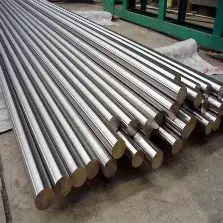

We maintain strict quality control measures to ensure the high purity of our rods. Our manufacturing process involves thorough melting and refining steps to remove impurities. Additionally, we conduct regular analyses to check the chemical composition of the rods, ensuring that they are homogenous throughout. This means that every part of the rod has the same properties, providing consistent performance in chemical applications.
Temperature Resistance
The chemical industry often involves processes that occur at high or low temperatures. Smooth titanium rods need to be able to maintain their properties over a wide temperature range. At high temperatures, the rods should not lose their strength or become brittle. In low - temperature environments, they should remain ductile and not crack.
Titanium has a relatively high melting point and good thermal stability. Our rods are designed to perform well under different temperature conditions. Whether it's a high - temperature chemical reaction or a low - temperature storage process, our smooth titanium rods can be relied upon.
Regulatory Compliance
Finally, regulatory compliance is an important consideration. The chemical industry is highly regulated, and the use of materials in chemical equipment must meet various safety and environmental standards. Our smooth titanium rods are manufactured in accordance with relevant industry standards and regulations. We ensure that our products do not contain harmful substances that could pose a risk to the environment or human health.
If you're in the chemical industry and looking for high - quality smooth titanium rods that meet all these requirements, look no further. We're here to provide you with the best products and services. Whether you need a small quantity for a research project or a large - scale supply for industrial production, we can meet your needs. Feel free to contact us for more information, and let's start a productive discussion about your procurement requirements.
References
- ASM Handbook Committee. "ASM Handbook Volume 2: Properties and Selection: Nonferrous Alloys and Special - Purpose Materials." ASM International, 1990.
- "Corrosion Resistance of Titanium and Titanium Alloys." NACE International, 2005.
- "Mechanical Properties of Metals and Alloys." ASTM International, 2019.