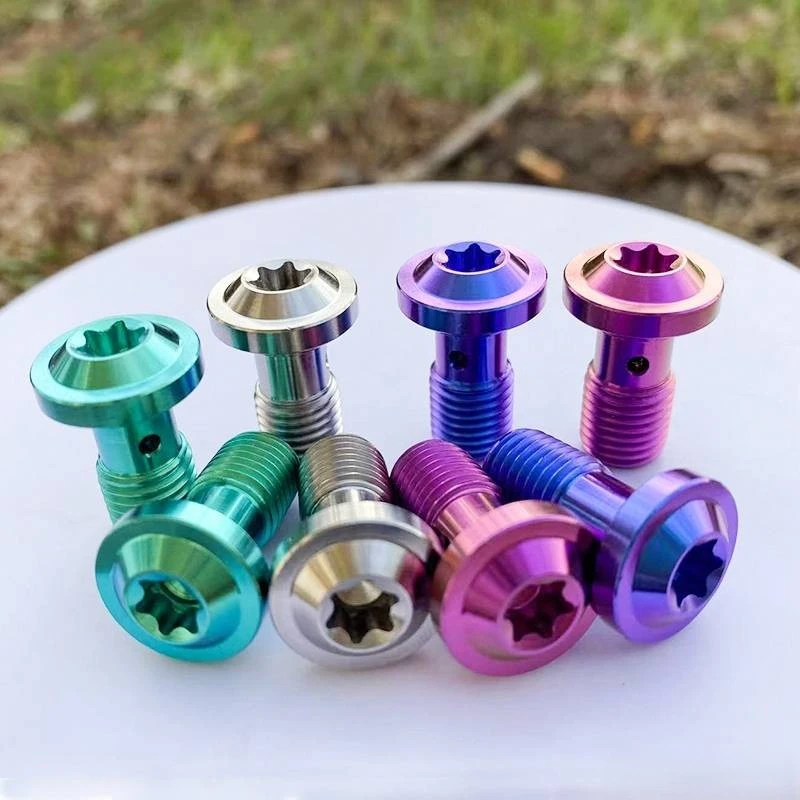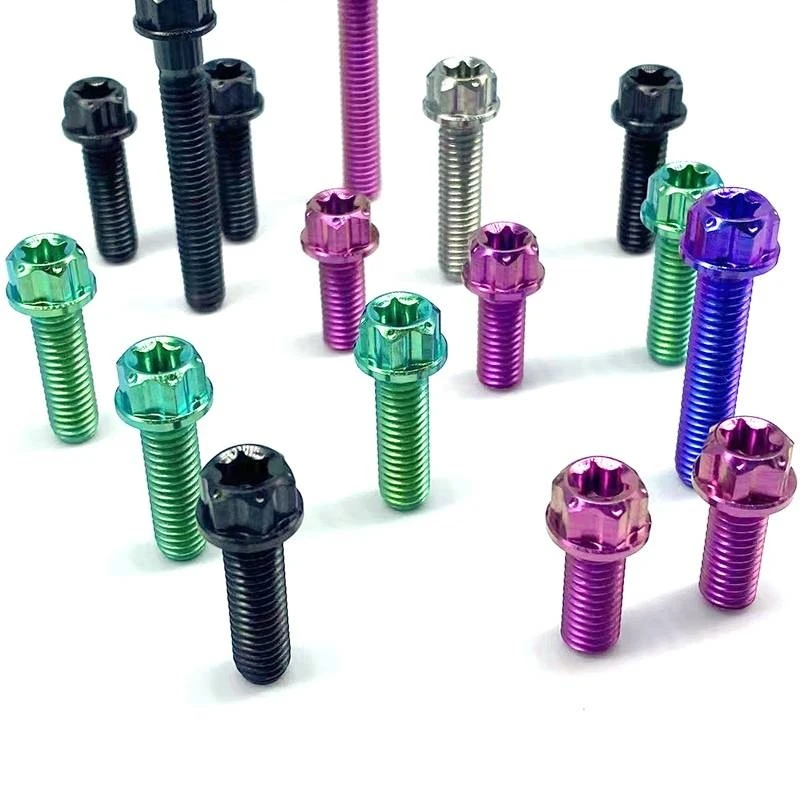
In the field of metal processing and surface treatment, titanium alloys are widely used in aerospace, medical devices, and high-end jewelry industries due to their high specific strength, low density, excellent corrosion resistance, and good biocompatibility. As a key process to improve the surface properties of titanium alloys and give them a decorative appearance, anodizing directly affects the performance and added value of the components.
Electrolyte concentration is one of the core parameters that determine the anodizing film formation rate and film quality of titanium alloy. Too high concentration will significantly accelerate the growth of oxide film, but too fast film formation process can easily induce local breakdown or "ablation", resulting in loose microstructure and increased surface roughness, which in turn affects the uniformity of optical interference effect and leads to uneven color development. For example, in phosphoric acid electrolytes, if the concentration of phosphoric acid is high, the oxide film formed on the surface of titanium alloy is often thick and uneven, and the ablation area exposes the matrix due to the damage of the film layer, forming obvious color difference and chiaroscuro contrast with the surrounding area.
On the contrary, if the electrolyte concentration is too low, the film-forming driving force is insufficient, and the oxide film grows slowly, making it difficult to form a film layer with a dense structure and uniform thickness. This type of film not only reduces mechanical properties and corrosion resistance, but also affects its optical properties, manifesting as dull color and uneven distribution. For example, in low-concentration sulfuric acid electrolyte, the oxide film obtained is usually thin, loose in structure, light in color and obviously mottled.
The temperature of the electrolyte has a key impact on the structural quality and color consistency of the oxide film. The increase in temperature will enhance the ion mobility, intensify the disturbance of the reaction system, cause current and voltage fluctuations, and then lead to the imbalance of the local growth rate of the film layer and reduce the overall uniformity. In addition, high temperatures may induce side reactions, such as local dissolution or recrystallization of the oxide film, which further disrupts the continuity of the film layer.
When the temperature of the electrolyte is too high, the surface oxidation reaction of titanium alloy is violent, and the film layer in some areas thickens too quickly, forming a raised structure, while the film thickness in other areas is thin, resulting in inconsistent interference color caused by the difference in film thickness. Under low temperature conditions, the reaction kinetics are limited, the film formation rate decreases significantly, and the degree of oxidation varies in different regions, which is prone to "blooming", that is, the surface appears plaque or striped color difference. For example, in low-temperature chromate electrolyte, titanium alloy oxide films often grow unevenly, with obvious color patch distribution.
Oxidation voltage is a key parameter that regulates the thickness of the anodizing film and the types of interference colors of titanium alloys. When the voltage is too low, the electric field strength is not enough to drive the full oxidation reaction, the film formation rate is slow, and the film thickness is insufficient, making it difficult to form a full and bright structural color, which affects the appearance and functionality.
However, excessive voltage has multiple risks: on the one hand, exceeding the critical breakdown voltage will lead to local dielectric breakdown, resulting in film defects; On the other hand, the growth stress of the film layer increases under high voltage, which can easily cause uneven distribution of film thickness, which in turn leads to different shades of color. The voltage change rate also needs to be strictly controlled, and too fast voltage ramp will make the film structure too difficult to reorganize and stabilize, resulting in blurred color transitions and unclear boundaries.
In the high-voltage process, the surface of titanium alloy may have point or linear breakdown, the film layer in the breakdown area fails, and the surrounding area is abnormal in film formation due to electric field distortion, forming local bright spots or dark areas, which seriously affects visual consistency.
The oxidation time directly affects the final thickness and structural integrity of the film layer. If the time is too short, the oxide film cannot grow sufficiently, the film thickness is insufficient, and the structure is not dense, resulting in light color and uneven distribution, which cannot achieve effective surface protection and decorative effects.
However, too long oxidation time can also introduce negative effects: as the reaction progresses, the growth rate of the film gradually slows down, and the interfacial corrosion effect increases, and excessive oxidation can lead to loose, porous, and even local peeling of the film layer. Such structural defects can seriously degrade the color uniformity, bonding and corrosion resistance of the film layer. Typically, the time for anodizing titanium alloys should be set between 30 seconds and 600 seconds, depending on the specific electrolyte system and process target.
During the long-term oxidation process, the film layer is continuously exposed to the electrolyte, which may cause local chemical dissolution, forming micropores and cracks, resulting in a decrease in optical properties and loss of protective function.
Current density is the core parameter that determines the growth rate of oxide film, and the uniformity of its distribution directly determines the consistency between film thickness and color. If the current density distribution is uneven, it will lead to differences in film formation rates in different regions, causing film thickness gradients, and then forming the phenomenon of "flowering" due to different interference conditions. For example, improper electrode arrangement will cause the current density of the workpiece edge or near the pole area to be high, and the film layer in this area will grow too quickly, which may cause rough thickening or ablation. The area away from the electrode is thin and light in color due to insufficient current density, forming obvious bands or plaques.
Therefore, proper tooling design and electrode layout are essential to achieve uniform current field distribution and are the prerequisites for obtaining high-quality and consistent colors.
In the anodizing process of titanium alloy, the parameters such as electrolyte concentration, temperature, oxidation voltage, time and current density are coupled to each other, which together affect the structural properties and apparent color of the oxide film. In actual production, it is necessary to systematically consider the interaction between various parameters, combine the material characteristics of titanium alloy and product use requirements, and carry out precise design and closed-loop control of the process window, in order to stably prepare titanium alloy anodized products with dense film layer, uniform color and excellent performance, and meet the strict requirements of surface quality in high-end applications.