

In titanium machining, wire EDM is a key process for achieving high-precision forming of titanium plates. As a company deeply rooted in the titanium industry, Qinhao Titanium regularly handles titanium plate cutting requirements. This article briefly outlines the process from three perspectives: principles, advantages, and thickness applicability.
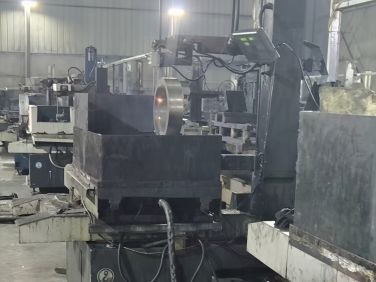
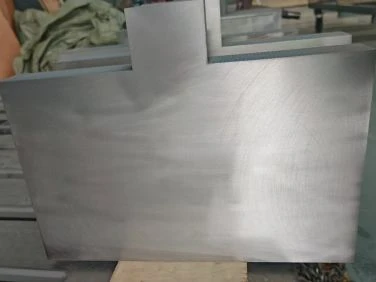
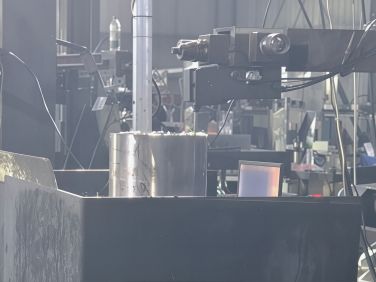

Wire EDM Principle
Electrical discharge wire cutting uses a continuously moving fine metal wire (such as molybdenum wire) as an electrode, with the workpiece as the other pole. Pulsed voltage is applied between them, and controlled spark discharges generate instantaneous high temperatures that melt or even vaporize the titanium plate material locally, thereby eroding it into shape. Throughout the process, the electrode wire never directly contacts the workpiece; CNC programs control the wire path to achieve precise cutting of complex contours.
Core Advantages
Titanium alloys have poor thermal conductivity and high adhesion, making conventional milling prone to tool sticking and wear. Wire EDM's non-contact discharge mechanism neatly avoids this pain point: no mechanical cutting force is generated during machining, so the titanium plate won't deform or thin walls won't warp; the cut surface is clean and burr-free, eliminating the need for deburring; and for hardened titanium alloys or complex internal corners and narrow slots, wire EDM offers far greater precision and flexibility than conventional tool machining.
Compared with waterjet cutting, another notable advantage of wire EDM lies in cut-surface verticality. Waterjet cutting relies on a high-pressure abrasive jet to erode material, and the jet naturally diverges as it penetrates thick plates-thick titanium plate cut surfaces often carry a certain taper (draft angle) that becomes more pronounced with thickness, usually requiring secondary trimming. Wire EDM, by contrast, uses the electrode wire as the cutting datum, with a vertical and stable wire path, producing a cut surface that is consistent top to bottom with no noticeable taper-directly meeting assembly requirements for verticality and eliminating the need for edge trimming.
Applicable Titanium Plate Thickness
In terms of equipment capability, industrial-grade wire EDM machines cover a wide thickness range-standard models handle up to 300mm, while some large-scale machines can exceed 500mm. In practical titanium plate machining, there is a trade-off between thickness, cutting efficiency, and surface quality. For the orders Qinhao Titanium commonly handles, wire EDM maintains stable dimensional accuracy and cut quality for titanium plate thicknesses ranging from tens of millimeters to around 200mm. For greater thicknesses, process parameters need to be adapted to the specific grade and precision requirements.
Leveraging the resources of the Baoji Titanium Valley industrial chain, Qinhao Titanium offers titanium plate wire EDM contract machining and custom services, providing one-stop from material to finished form. For related inquiries, please contact our technical team to discuss your specifications.