

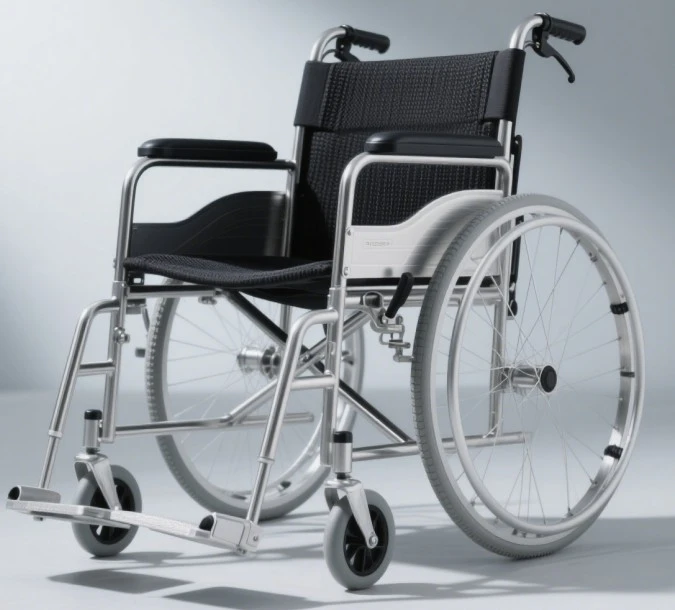
In modern society, wheelchairs serve as essential mobility aids for individuals with limited mobility, and their performance and quality directly impact users' quality of life and mobility experience. The materials used in wheelchair manufacturing must balance comfort, aesthetics, durability, and lightweight requirements. Currently, stainless steel, alloy steel, and aluminum are the primary metallic materials used in wheelchair production due to their low cost and ease of processing. However, titanium alloys, with their unique advantages, demonstrate significant potential in the wheelchair manufacturing sector. Although they are not yet widely adopted, their future prospects are promising.
The significant advantages of titanium alloy in wheelchair manufacturing:
1.Exceptional Comfort
Titanium alloy excels in terms of comfort. Its thermal conductivity is only one-tenth that of aluminum, and its specific heat capacity is half that of stainless steel. When in contact with the human body, a titanium alloy wheelchair quickly approaches body temperature, avoiding the cold, uncomfortable sensation often associated with certain metallic materials. Additionally, titanium alloy possesses excellent biocompatibility and does not cause allergic reactions, which is particularly important for users with sensitive skin. Furthermore, titanium alloy offers superior vibration damping properties. Under the same load, a titanium alloy wheelchair deforms significantly less than a stainless steel wheelchair and produces less vibration. This means users experience a smoother, more comfortable ride, effectively reducing physical discomfort caused by wheelchair vibration.
2.Outstanding Aesthetics
The aesthetics of titanium alloy are also one of its major highlights. Through anodizing technology, titanium alloys can be colored, giving wheelchairs a wide range of vibrant hues. This means titanium alloy wheelchairs are no longer limited to traditional iron gray or bright silver, but can meet the diverse aesthetic needs of different users. Whether it's fashion-conscious young people or quality-conscious middle-aged and elderly individuals, everyone can find a titanium alloy wheelchair style that suits their preferences, adding a unique touch to their mobility experience.
3.Exceptional Strength
Titanium alloys demonstrate exceptional strength. In corrosive environments, titanium alloys demonstrate far superior corrosion resistance to common substances such as sweat and detergents compared to stainless steel. Even when exposed to highly corrosive aqua regia, titanium alloys remain stable and unaffected by corrosion. This property ensures that titanium alloy wheelchairs are less prone to damage from corrosion over extended periods of use, significantly extending their service life. For users, this translates to reduced maintenance and replacement costs, as well as enhanced reliability and peace of mind.
4.Lightweight Design
Lightweight design is another key advantage of titanium alloy in wheelchair manufacturing. Compared to the steel wheelchairs and aluminum alloy frame wheelchairs commonly available on the market today, titanium alloy wheelchairs are significantly lighter in weight. This is due to the perfect combination of high strength and low mass inherent in titanium alloys. The lighter weight makes it easier and more efficient for users to push the wheelchair, particularly for those who need to use the wheelchair for extended periods or propel it independently. Reducing the weight of the wheelchair effectively minimizes physical exertion, enhancing the convenience and comfort of mobility.