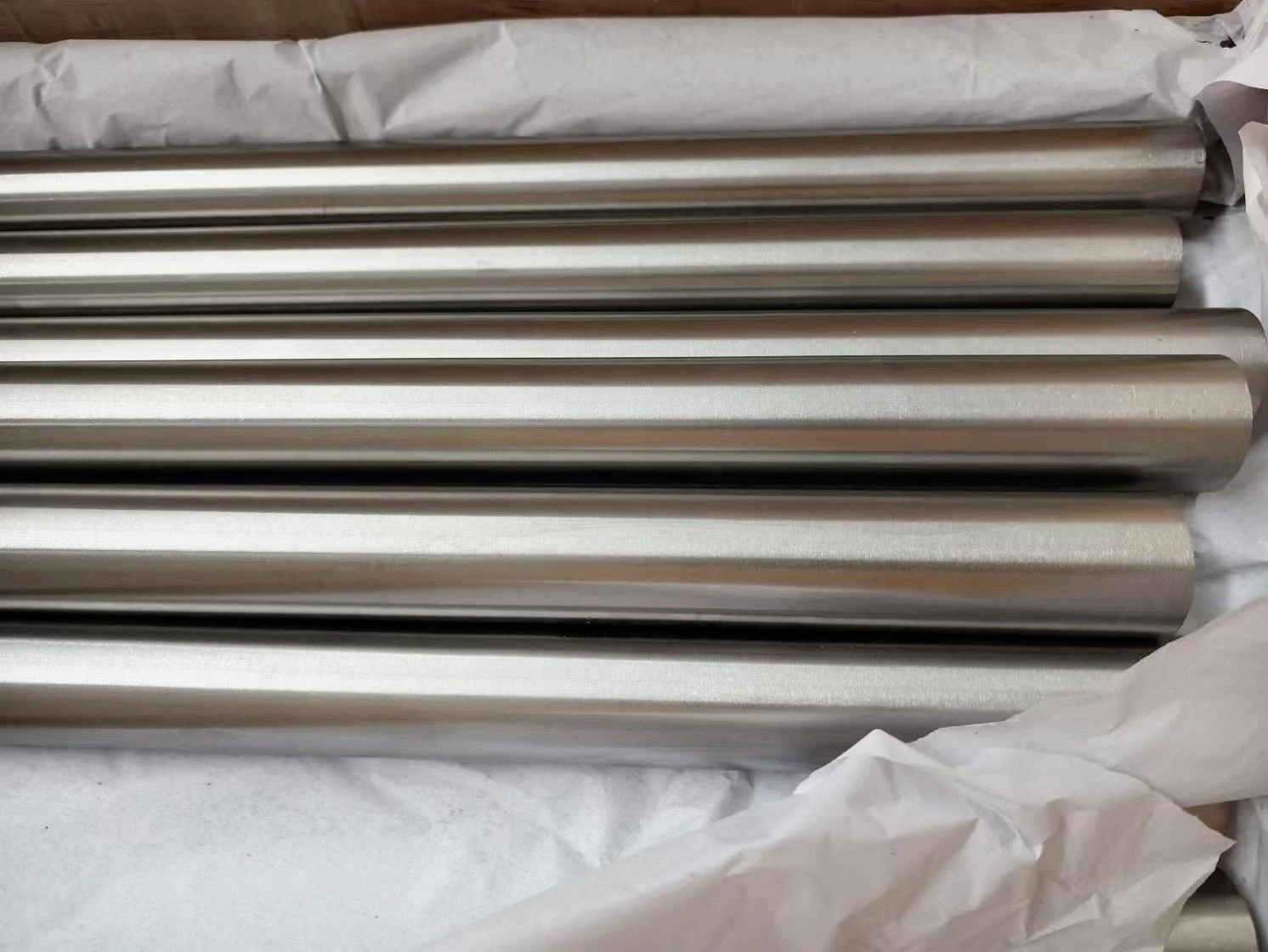
Titanium rod, due to their high strength, corrosion resistance, and biocompatibility, occupy a core position in aerospace, medical devices, and marine engineering. However, limitations in their surface properties (such as insufficient wear resistance, high coefficient of friction, and limited bioactivity) often restrict their functional expansion. Through systematic surface treatment technologies, the overall performance of titanium rods can be significantly improved to meet diverse application needs.
1. Mechanical Treatment: Physical Modification to Optimize Surface Quality
• Mechanical Polishing: Through step-by-step polishing with sandpaper and polishing wheels, the surface roughness (Ra) of the titanium rod is reduced to below 0.01μm, achieving a mirror finish. This process not only improves the appearance but also enhances the adhesion of subsequent coatings, making it suitable for high-precision optical devices, decorative components, and industrial parts requiring coating.
• Sandblasting: High-speed abrasive particles (such as alumina and silicon carbide) impact the surface to remove the oxide layer and impurities, forming a uniform roughness (Ra 2-5μm). This process, as a key step in the pretreatment stage, provides a clean and activated substrate for chemical treatment or coating, improving the bonding strength of subsequent processes.
2. Chemical Treatment: Precise Control of Surface Chemical State
• Chemical Polishing: Using weak acids (such as phosphoric acid) or alkaline solutions to dissolve microscopic protrusions on the surface, rapidly improving the finish of the titanium rod. However, subsequent sealing treatment (such as immersion in a silane solution) is required to prevent oxidation. Suitable for rapid leveling of complex structural parts, such as the initial treatment of aerospace components.
• Acid Pickling and Purification: A mixture of hydrofluoric acid and nitric acid can efficiently remove oxide scale and contaminants (such as oil stains and metal particles), providing a clean substrate for coating or heat treatment. Strict temperature (20-40℃) and time (1-5 min) must be controlled to avoid excessive corrosion leading to surface defects and affecting the quality of subsequent processes.
Learn more about titanium rod products: