1.Problems in the processing of titanium alloy fasteners
Corrosion problems. In the installation of titanium alloy fasteners are easy to form a certain gap, so that there will be a surface coating between the metal air attack inflow, which leads to the fasteners in the production process is easy to dress. Subsequent use of the process, the connection tightness will be affected. The main reason for the corrosion resistance of titanium alloy material is that there is a protective oxide film on its surface. This film can effectively protect the titanium alloy inside the material from oxidation, thus improving the corrosion resistance of titanium alloy materials.
Problems in turning processing. Titanium alloy material is a difficult-to-machine material with poor thermal conductivity. The heat generated during machining will not diffuse through the part and machine structure, but is concentrated in the cutting zone, there is a strong notch sensitivity, which may lead to chipping and deformation; and the blade bluntness will produce even higher heat and further reduce the tool life High temperatures generated during the cutting process will also cause continuous hardening of the workpiece, a phenomenon that affects the surface integrity of the titanium and may lead to the geometric accuracy of the part is not accurate, and seriously reduce its fatigue strength In general, in reasonable machining conditions, the turning process is not difficult, and it is not easy. Accurate, and seriously reduce its fatigue strength Generally speaking, in reasonable machining conditions, the turning process is not difficult, if it is for mass production, continuous cutting, as well as metal removal of a relatively large amount of cutting, the need to use carbide cutting tools; and in the shaping of the cutting or cutting off the need for reasonable adjustment of the steel tooling, and the use of metal ceramic cutting tools, if necessary.
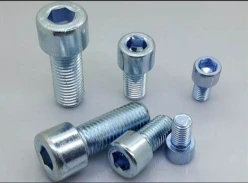
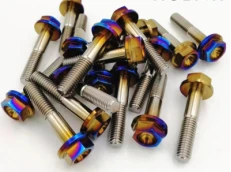
Titanium alloy fastener machining precision problems. The precision requirements for machinery will be higher. In the mechanical production, due to the tool every production process is in a state of wear and tear, and according to the procedure to calibrate, titanium alloy fasteners have a higher density, the tool is easy to be worn in the process of processing, in the state of wear and tear, the tool is still in accordance with the procedure for processing, it is easy to cause tight pieces in the machining process of the precision is affected. If the precision of the fasteners in the entire process of precision is not strictly controlled within the error, in the process of using the titanium alloy and other materials can not be tightly connected to the back of the use of a certain impact, to enhance the precision of titanium alloy fasteners in the machining process is a major problem to overcome in the production process. For example, the fastener technology products shown in the figure is in the high precision production workshop to do out of the product, this product has a better connection performance.
2.Process know-how for machining titanium alloy fasteners
Use inserts with positive angular geometry to reduce cutting forces, cutting heat and deformation of the workpiece; keep insert edges sharp, blunt tools are the cause of heat build-up and wear and can easily lead to tool failure.
Maintain a constant feed to avoid hardening of the workpiece, the tool should always be in the feed state during the cutting process, the radial draft ae should be 30% of the radius when milling.
Use high-pressure, high-flow cutting fluid to ensure the thermal stability of the machining process and to prevent surface denaturation of the workpiece and damage to the tool due to excessive temperature.
Machine the titanium alloy in its softest state possible, as the material becomes more difficult to machine after hardening and the heat treatment improves the strength of the material.
Use a large tip radius or chamfer cut to put as much of the cutting edge into the cut as possible. This reduces cutting forces and heat at each point and prevents localised breakage.