

Background to technological breakthroughs
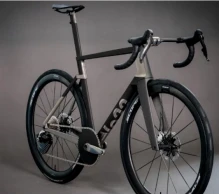
An international bicycle brand recently launched a competition-grade model with a fully 3D-printed titanium alloy frame, with a frame pricing range of 75,000 to 113,000 RMB. This technological breakthrough focuses on two core propositions: the optimisation of aerodynamic performance of titanium alloy materials and the one-piece moulding of complex structures, marking the official entry of metal 3D printing technology into the mass production stage of high-end sports equipment.

Manufacturing bottlenecks of traditional titanium frames
1. Limitations of tube forming
Maximum deformation of hydroforming process is only 30%, unable to achieve pneumatic airfoil cross-section
Standard titanium tube wall thickness tolerance ±0.3mm, restricting the space for lightweight design.
2. Welding process defects
Conventional mitre welding leads to a pneumatic loss of up to 18 per cent (wind tunnel measured data)
The strength of heat-affected zone decreases by 20%-30%, forming a structural weak point
3. Comparison of historical cases
1990s classic: significant airflow separation in tube transition zone
Contemporary competitor: welded nodes still produce turbulent drag
Key innovations in 3D printing technology
1. Pneumatic structure breakthrough
Adopting NACA 64-015 airfoil cross-section, the drag coefficient is reduced by 40%.
Gradual pipe diameter design (Φ28-Φ42mm continuous transition) to eliminate the step mutation
2. Mechanical performance optimisation
Topology optimised five-pass structure: local wall thickness gradient from 1.2mm to 2.5mm.
Lattice filling technology: energy absorption efficiency at key nodes increased by 65%.
3. Manufacturing process parameters
Material: aerospace grade Ti-6Al-4V ELI titanium alloy powder (particle size 15-45μm)
Printing precision: 30μm layer thickness laser fusion, densification of 99.97%